


What is silicone high-temperature wire?
If you have purchased wires for heaters, motors, or LED lighting fixtures, you are likely to have heard of this term.
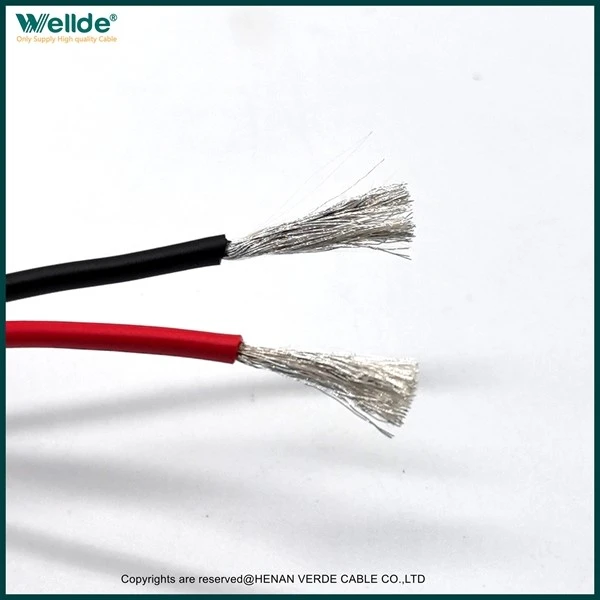
Silicone high-temperature wire is a wire with an insulation layer made of silicone rubber material.
Conductor: Tin plated copper wire (anti-oxidation)
Insulation layer: Silicone rubber, cured by high-temperature cross-linking through vulcanized tubes
The most obvious difference? It feels very soft - like a silicone baking pad, not as hard as PVC.
Why is it resistant to high temperatures?
| Comparison | Ordinary PVC cable | Silicone high-temperature wire |
| Long term working temperature | 70℃ ~ 105℃ | -60℃ ~ 200℃ |
| Performance at minus 40 ℃ | It becomes hard and breaks when folded | Still soft, bend freely |
| High temperature aging life | Brittle after 1-2 years at high temperatures | Stable operation below 200 ℃ for more than 10 years |
Where do customers use it?
We export to over 20 countries, and the top five actual usage scenarios are:
- Kitchen appliances: ovens, rice cookers, and stoves - unable to withstand humid and hot environments with ordinary wires
- LED lighting fixtures&stage lighting: High temperature inside high-power lamp housing, silicone wire prevents short circuit
- Motor&generator leads: hot and vibrating, and the insulation layer of ordinary wires is prone to peeling off
- New energy vehicle battery pack: high flame retardant requirements and high flexibility requirements
- Aerospace&Military Industry: Severe Temperature Variations, Reliability Must Be Strong
Silicone rubber high-temperature wire is not a universal wire
There are advantages and disadvantages
Advantages:
Resistant to extreme cold and heat
Soft and easy to wire
Flame retardant, low smoke, halogen-free
Stable electrical insulation performance
Shortcomings:
Afraid of scratches: Sharp metal edges can easily cut through the insulation layer
Not resistant to oil: Do not come into contact with mineral oil or gasoline, as they may swell
Expensive: It is indeed more expensive than PVC. But a rhetorical question: How much does it cost to save per meter? Is the risk of a fire from replacing one device worth it?
Three steps to choose the right silicone wire
Step 1: Check the temperature
Long term temperature exceeding 150 ℃ → Silicone wire
Below 150 ℃ → Crosslinked PE or PVC is sufficient, there is no need to spend extra money
Step 2: Check the installation space
Small bending radius, requiring repeated bending → Choose silicone wire, the softer the better
Straight wiring and fixed installation
Step 3: Check the authentication
Export certification CE/Rohs, etc
Why did you come to us?
Material not adulterated: pure silicone raw material, no recycled rubber, no inferior agents
Complete certification: CE/REACH/RoHS can be provided
Transparent delivery time: 3-5 days for sampling, 15-30 days for bulk orders, no delay
Flexible customization: conductor specifications, colors, printing, packaging methods can be customized according to your requirements
We have seen too many cases of customers buying at a low price and experiencing insulation cracking after three months - that kind of wire has a sticky surface, a hard feel, and becomes useless when baked at high temperatures.
Choosing the right line and using the right place is the greatest respect for the safety of one's own equipment.


 Skype: verdecable